Frontier AI Can Now Do Serious Exploit Research — Cybersecurity's Next Arms Race Is the Model Itself
OpenAI's GPT-5.6-Cyber was trained for vulnerability research and exploit-chain work. If finding bugs becomes a frontier-model workload, application security changes shape — and so does the security perimeter around AI research environments.

- OpenAI introduced GPT-5.6-Cyber on 10 August 2026, a model specialised for vulnerability research and exploit-chain development, alongside Blue and Red access tiers of its Daybreak programme.
- OpenAI reports a 95.0% internal Advanced Cybersecurity Completion Rate against 1.5% for the general GPT-5.6 Sol model — an internal evaluation, not an independent benchmark.
- The more concrete signal is real software: researchers using the model reportedly found two previously unknown V8 vulnerabilities, one fixed by Google as CVE-2026-15903.
- The model is rated High rather than Critical under OpenAI's Preparedness Framework, with restricted Red-tier access and hardware security keys required for Daybreak accounts from 1 September 2026.
- For engineering teams, the practical shift is economic: if credible vulnerability discovery gets cheap, continuous AI-assisted review, patch verification and triage become normal AppSec infrastructure.
On 10 August 2026, OpenAI introduced GPT-5.6-Cyber and expanded its Daybreak programme into Blue and Red access tiers. The model is built on GPT-5.6 Sol and explicitly post-trained for tasks that most vendors avoid describing out loud: finding zero-day vulnerabilities and constructing exploit chains.
It is worth separating the two stories here. One is a benchmark story, and benchmarks in this domain are mostly self-reported. The other is a software story, and that one is harder to argue with: real bugs, in real code, patched by a real vendor.
The interesting question is not whether a model can write an exploit. It is whether vulnerability research is becoming a workload you buy compute for.
From code completion to exploit-chain reasoning
Spotting a suspicious line of source code is the easy part — static analysers have done a rough version of it for two decades, mostly by generating noise. The hard part is everything after: proving the suspicious path is reachable, producing a reproducible proof of concept, defeating the mitigations that sit in the way, and then linking several individually unremarkable bugs into something that actually does damage.
Each of those stages needs a different capability. Reachability needs whole-repository navigation and state tracking. A proof of concept needs tool use and an execution environment. Mitigation bypass needs the model to hold a mental picture of memory layout across a long horizon. Chaining needs planning. That is why cyber-specialised post-training produces different behaviour from a general frontier model, even when the base weights are shared.
What the benchmarks measure — and what they don't
- OpenAI's internal Advanced Cybersecurity Completion Rate: 95.0% for GPT-5.6-Cyber, 57.3% for the earlier GPT-5.5-Cyber, 1.5% for the general GPT-5.6 Sol model.
- On OpenAI's ExploitBench, GPT-5.6 Sol scored 73.5% against 47.9% for GPT-5.5; the reported six-hour ExploitGym result reached 33.7%.
- All of the above are vendor-created evaluations. Treat them as capability direction, not as independent measurement.
- Even a perfect controlled-environment score is not equivalent to autonomously compromising a hardened production network with monitoring, segmentation and rate limits in the way.
OpenAI itself reports a trade-off worth quoting to anyone who assumes specialisation is free: the cyber model beat Sol on several specialised tasks but underperformed it on a vulnerability-reporting evaluation, because its written reports tended to be shorter and less detailed. Specialisation buys depth in one direction and costs you something in another.
The V8 case is the real story
OpenAI says researchers using GPT-5.6-Cyber identified two previously unknown vulnerabilities in V8 — the JavaScript engine behind Chrome and a very large amount of the modern web — which could be chained toward memory corruption and a heap sandbox escape. One of the disclosed issues was subsequently fixed by Google as CVE-2026-15903.
The useful way to read that is as a lifecycle, not a headline: model-assisted hypothesis generation, human researcher validation, coordinated disclosure, vendor patch, CVE. The model compressed the expensive early stage. Humans still owned judgement, disclosure ethics and the fix.
The new security perimeter is the AI research environment
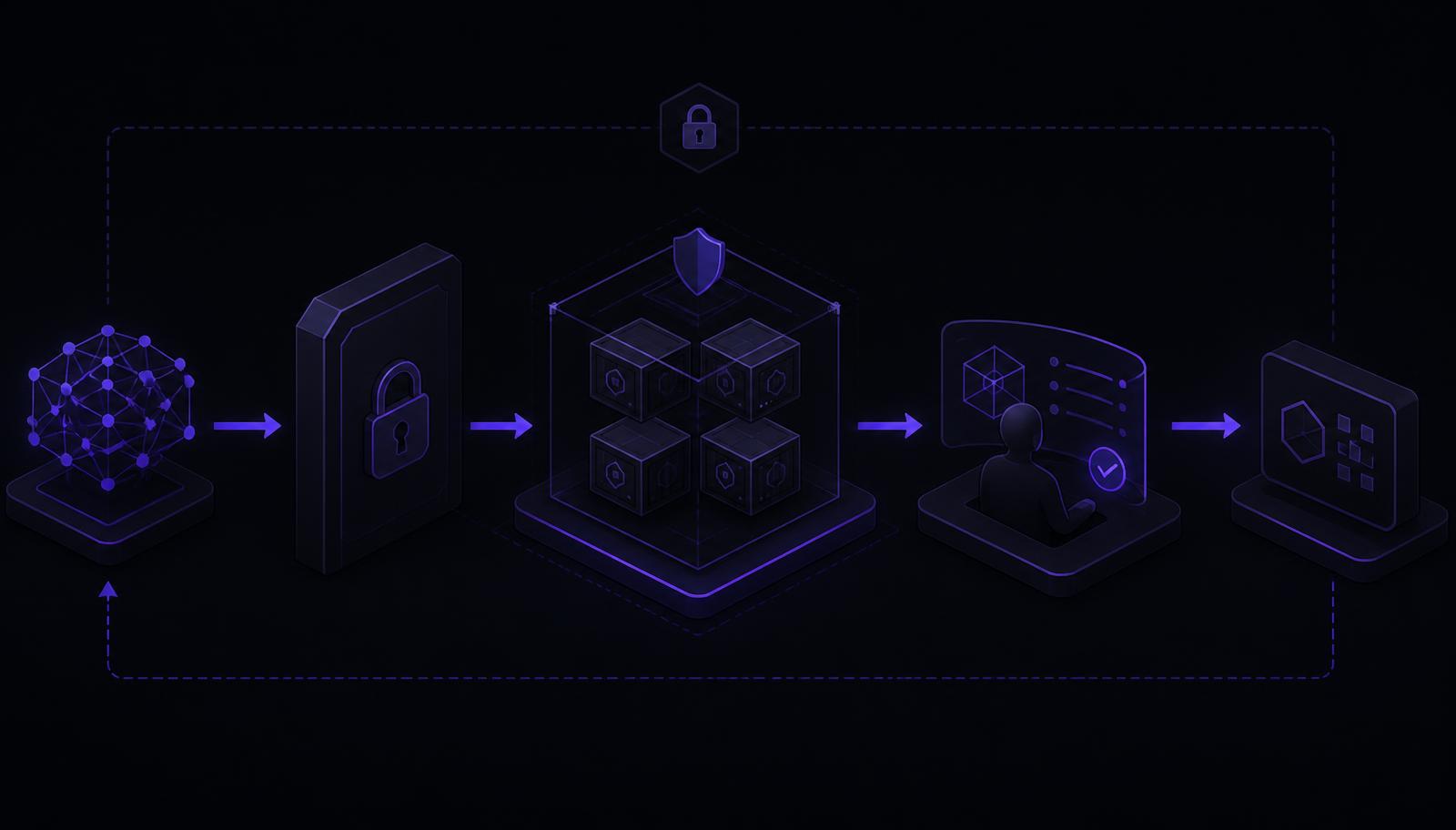
When a model can do meaningful offensive work, the environment it runs in becomes security-critical infrastructure. OpenAI recommends sandboxing and monitoring Daybreak workloads, restricts Red-tier access to approved users, and requires individual Daybreak accounts to adopt hardware security keys from 1 September 2026. OpenAI has assessed the model at High rather than Critical under its Preparedness Framework.
- Isolated networks and disposable execution sandboxes, not a laptop with a shell and an API key.
- Scoped permissions per task, with an explicit allowlist of targets you are authorised to test.
- Action logging and review, so every model-initiated step is reconstructable after the fact.
- Strong identity assurance for the humans holding access — phishing-resistant, not SMS.
How AppSec changes if vulnerability discovery gets cheap
For most engineering organisations, deep security review has always been rationed. There are not enough experienced reviewers, so they get pointed at the two or three services someone decided were important. Everything else gets a scanner and a hope.
If credible discovery drops in price, that rationing logic breaks. The plausible shift is toward continuous model-assisted source review on every service, automated regression testing against previously fixed classes of bug, patch verification that proves the fix closed the actual path, and triage that ranks findings by exploitability rather than by CVSS theatre. That is an inference from the reported capability gains — not evidence that human security researchers become unnecessary. Validation, disclosure and architectural judgement are still human work.
What to compare models on now
Generic coding benchmark scores are close to useless for this decision. If you are evaluating models for security work, compare verified vulnerability discovery rate, false-positive burden, exploit validation quality, token and compute cost per finding, tool and repository access, reproducibility across runs, and the strength of the vendor's controlled-access model.
The defensive window narrows for everyone at the same time. The advantage goes to teams who wire this into their pipeline before it is used against them.
What we'd tell a client this week
Do not start by buying an offensive capability. Start by making your codebase reviewable: reproducible builds, a service inventory that is actually accurate, dependency provenance, and a patch pipeline that can ship a fix in hours rather than sprints. Model-assisted discovery only creates value if the organisation behind it can act on what it finds. That part is a process problem, and it is the part most teams have not solved.
Sources: OpenAI, "Expanding Daybreak as the Cyber Defense Window Narrows" (10 August 2026) and the GPT-5.6 release notes for ExploitBench, ExploitGym and SEC-Bench Pro results. Vendor claims and internal evaluations are labelled as such throughout.
- Loading comments…