Why Your Business Doesn't Have a Technology Problem (It Has a Process Problem)
Most businesses asking for AI don't need AI — they need better processes. A field guide to spotting the manual work quietly draining your operations, and what to automate first.

- Most companies asking for AI don't have a technology problem — they have a process problem. Adding another tool to a broken workflow just adds friction.
- The real cost of manual work is hidden: 25 minutes a day per employee compounds into hundreds of lost hours a year, plus delayed responses and missed opportunities.
- Start with a single workflow — sales intake, invoicing, onboarding — and measure the recovered time before scaling.
- AI is powerful, but it should enhance a good process, not compensate for a broken one. Sometimes a simple automated workflow beats a shiny chatbot.
We need AI.
It's one of the most common statements we hear from business owners today.
But after speaking with companies across industries, we've noticed something surprising.
Most businesses asking for AI don't actually need AI.
They need better processes.
That might sound controversial, but let's look at what really happens inside a typical business.
A Monday Morning Inside an Average Business
It's 9:00 AM. The first customer enquiry arrives through WhatsApp.
- An employee copies the details into Excel.
- Another employee updates the CRM.
- Someone emails the operations team.
- A manager approves the request through WhatsApp.
- Finance manually creates an invoice.
- Customer support sends another email.
- The sales team follows up two days later.
Now imagine this happening 200 times every week.
None of these tasks create value. They're simply administrative work.
And every manual step introduces the possibility of delays, mistakes, duplicate work, and missed opportunities.
The Real Cost of Manual Work
Business owners usually notice the obvious costs: employee salaries, software subscriptions, office rent, marketing.
What they don't see are the hidden operational costs.
For example: an employee spends just 25 minutes every day copying information between systems. That seems insignificant. Until you multiply it.
25 minutes × 22 working days × 12 employees × 12 months.
Suddenly you've lost hundreds of hours every year doing work that software could complete automatically.
The cost isn't just time. It's delayed customer responses. Missed follow-ups. Incorrect reports. Employee frustration. And opportunities that quietly disappear.
Technology Isn't the Solution
This is where many businesses make an expensive mistake. They buy another tool.
- Another CRM.
- Another dashboard.
- Another AI subscription.
- Another project management platform.
Instead of fixing the workflow, they simply add another application to an already fragmented process.
Now employees spend even more time switching between systems.
Technology should simplify operations. Not complicate them.
The Question You Should Actually Ask
Instead of asking, "Which AI tool should we buy?" ask, "Why does this process require so much manual work?"
That single question changes everything. Because most operational problems aren't caused by a lack of technology. They're caused by disconnected workflows.
Where Businesses Lose the Most Time
We've found that repetitive work usually falls into a few predictable categories.
Sales
- Copying leads into CRMs
- Following up manually
- Assigning enquiries
- Updating pipelines
- Creating proposals
Operations
- Internal approvals
- Task assignments
- Daily reporting
- Spreadsheet updates
- Project tracking
Finance
- Invoice creation
- Payment reminders
- Bank reconciliation
- Expense approvals
- Vendor management
HR
- Employee onboarding
- Document collection
- Leave approvals
- Performance reviews
- Payroll preparation
Customer Support
- Frequently asked questions
- Status updates
- Appointment confirmations
- Ticket routing
- Feedback collection
None of these activities define your business. They're simply operational processes. And processes can often be improved.
Business Process Automation, Explained
Business Process Automation isn't about replacing people. It's about removing repetitive work.
Imagine a customer submits an enquiry. Instead of someone manually checking emails, copying information into spreadsheets, creating CRM records, assigning salespeople, sending confirmations, and scheduling reminders — the entire workflow happens automatically.
The right employee only gets involved when human judgment is actually required.
That's automation.
Where AI Actually Fits
This might surprise you. Many automation projects don't require AI at all. Simple workflow automation can already eliminate huge amounts of repetitive work.
AI becomes valuable when businesses need to:
- Read unstructured documents
- Extract information from PDFs
- Classify requests
- Summarise conversations
- Search internal knowledge
- Generate personalised responses
- Assist decision-making
AI should enhance a good process. It shouldn't compensate for a broken one.
The Best Automation Projects Start Small
One of the biggest misconceptions about automation is that it requires rebuilding an entire business. It doesn't.
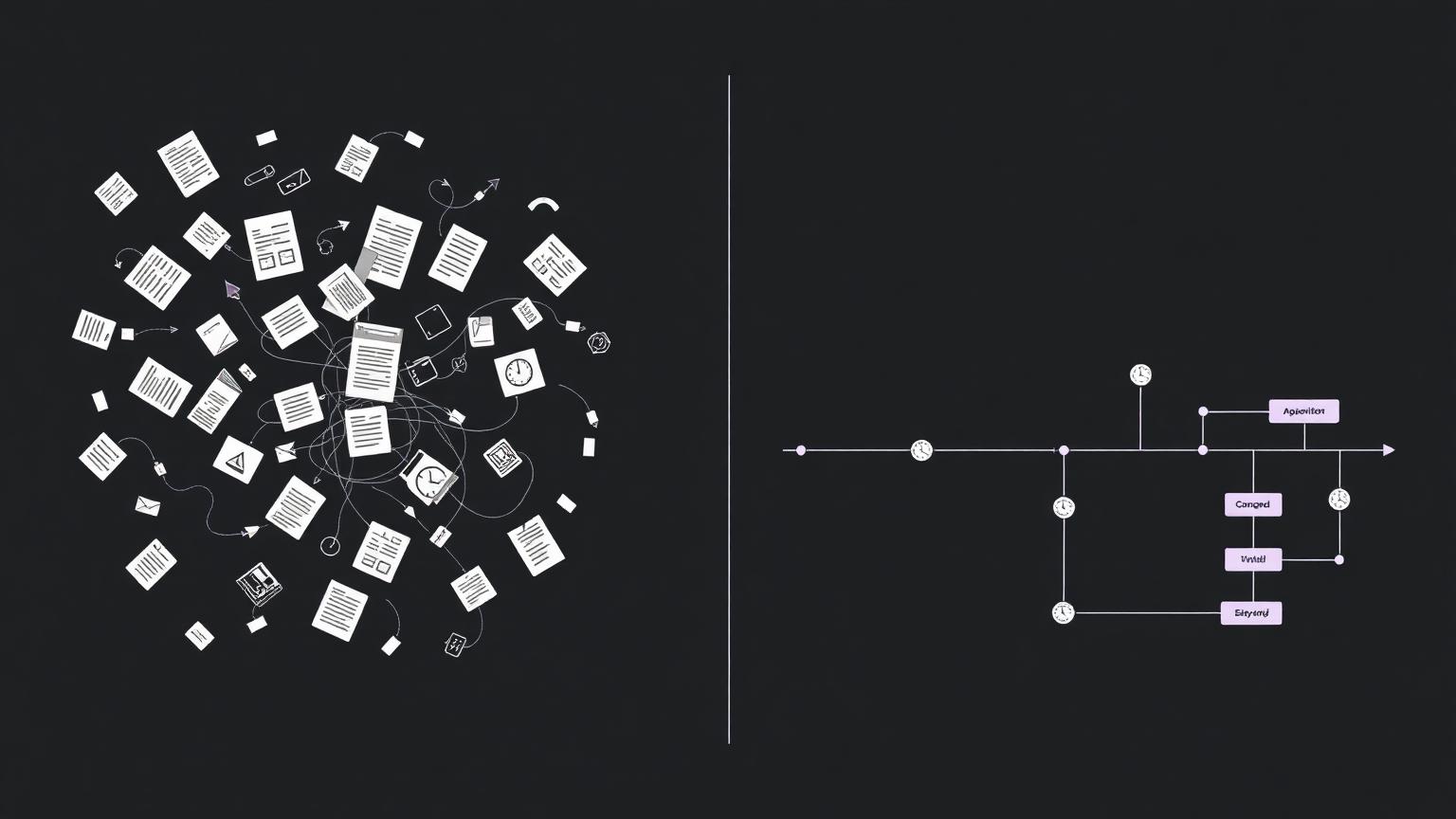
The most successful projects usually begin with a single workflow.
Before
- Customer enquiry
- Employee reads email
- Copies information into CRM
- Assigns salesperson
- Creates reminder
- Sends acknowledgement
- Updates spreadsheet
After
- Customer enquiry
- Workflow starts automatically
- CRM updates instantly
- Correct salesperson assigned
- Confirmation sent
- Follow-up scheduled
- Dashboard updated
Same business. Same employees. Completely different experience.
The Businesses That Will Win
The companies that grow fastest over the next decade won't necessarily have the largest teams. They'll have the best systems.
While competitors hire more people to manage repetitive work, efficient businesses will automate those tasks and allow their teams to focus on customers, creativity, strategy, and growth.
That's the real advantage.
How Techilla Approaches Automation
At Techilla, we don't begin with software. We begin with questions.
- Where does work slow down?
- Which tasks are repeated every day?
- Which approvals delay your team?
- Which information gets copied between systems?
- Which reports consume hours every week?
- Which tools don't communicate?
Only after understanding your business do we recommend the right solution. Sometimes that's automation. Sometimes it's custom software. Sometimes it's AI. Sometimes it's simply connecting the systems you already use.
The technology is never the product. The outcome is.
Final Thoughts
Businesses often believe they need bigger teams. More software. More dashboards. More AI.
In reality, many simply need fewer manual processes.
Every repetitive task is an opportunity to improve efficiency. Every disconnected workflow is an opportunity to reduce friction. Every hour spent copying information is an hour that could be invested in growing the business.
The future belongs to companies that don't just adopt technology. It belongs to companies that build better systems.
And that's exactly where Techilla comes in.
Ready to Discover What You Can Automate?
If you suspect your team spends too much time on repetitive work, we'd love to help. Book a Free Automation Discovery Call with Techilla.
We'll analyse your existing workflow, identify automation opportunities, and recommend practical solutions tailored to your business — whether that involves workflow automation, custom software, AI, or simply connecting the tools you already use.
Stop buying more software. Start building better processes.
- Loading comments…